The little loop: an everyday scooter adventure
Dinner is still to be made, and there is time for a short outing. A familiar loop, a bench and an easy way home may be all the plan you need.
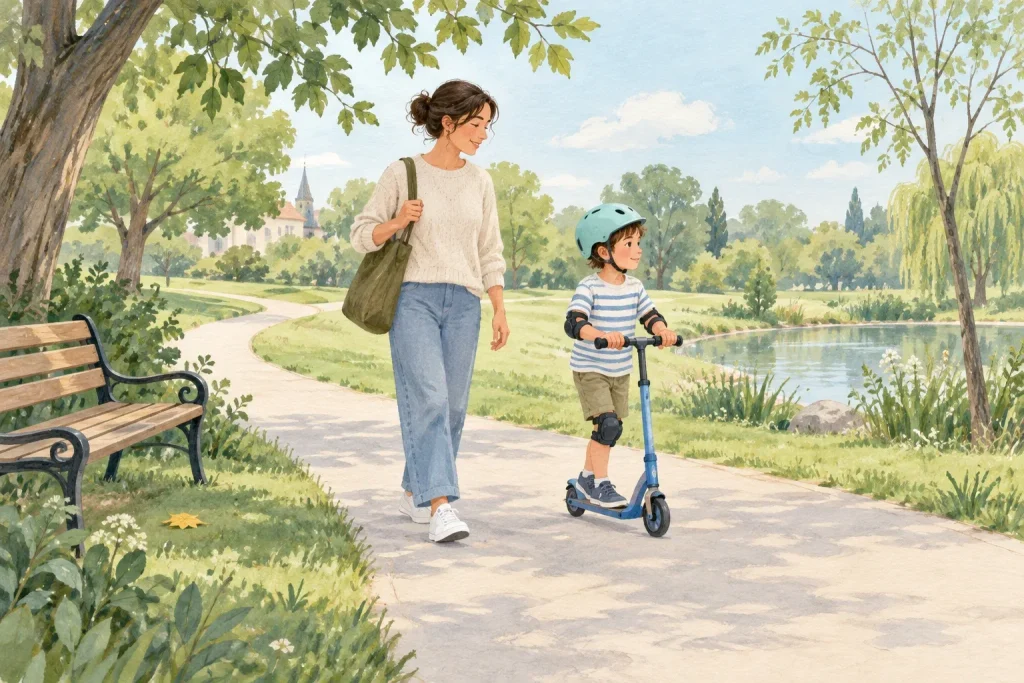
OUTSIDE TOGETHER.
Picture a weekday afternoon. There is dinner to make later, someone’s water bottle to find now, and enough daylight for a short trip outside. A day out would take more planning than you have energy for. A lap of the nearby park might work.
That is the outing we have in mind here: one familiar loop, with an adult alongside and an easy way home. This is an imagined afternoon you can borrow from, rather than a route or a timetable to follow.
Choose the way back before setting off
Pick a place you already know, where scooter riding is permitted. Look for a short, level, smooth paved route, dry underfoot and away from motor traffic. Avoid a route that forces you to finish a long circuit once you have started. A bench near the beginning is useful; so is knowing where you can leave the path without blocking other people.
Before riding, check the scooter, secure the helmet and required protective gear, and follow the model’s instructions. The CPSC’s scooter guidance is a useful reminder about equipment and surfaces. Stay with your child throughout the outing.
Choose an obvious stopping point together. The bench, perhaps. If you reach it and want to head home, you already know where the outing ends. If everyone is comfortable and the path is still suitable, you can decide on another loop there.
The stop can become the interesting part
Imagine a yellow leaf beside that bench. You may barely notice it. Your child may want to know why it is yellow, why the edge is brown, or whether it can come home in your bag.
Stop riding and move clear of the path before taking a closer look. Park the scooter, have a drink, and see what the conversation does. You do not need to have a tree fact ready. “I don’t know; shall we look it up later?” is an honest place to begin.
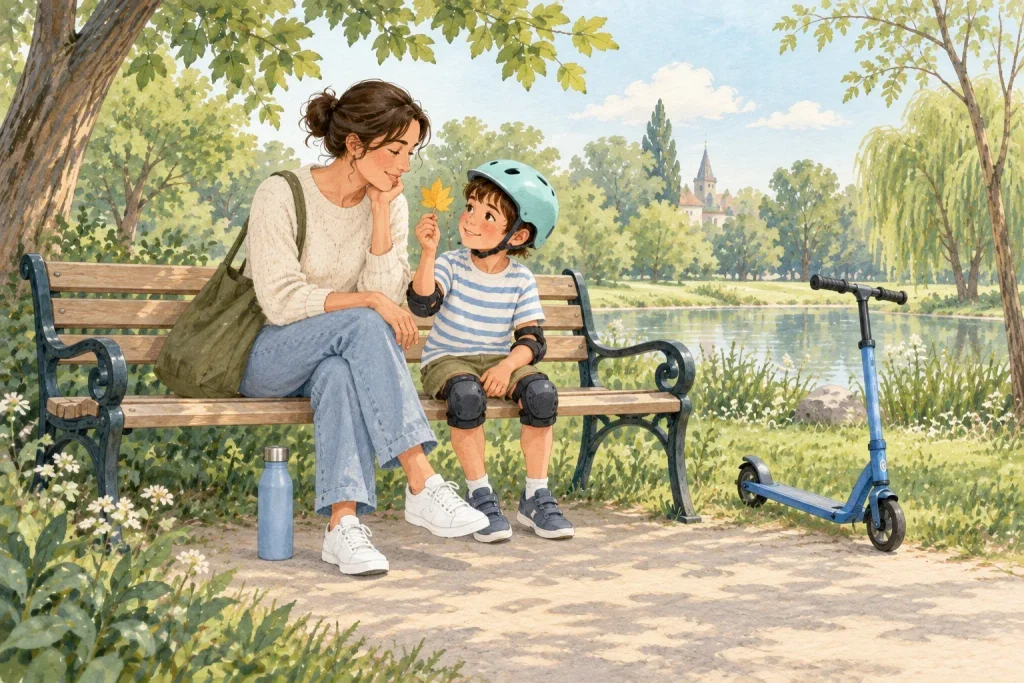
If your child enjoys a game, choose a color while you are sitting together and look for it from your stopping place. Keep the looking game for the pause. Once riding begins again, attention belongs on the path.
Or leave the game out. A drink on a bench is enough of a reason to sit down.
Make it easy to finish
Back at the starting point, check in. Another lap may sound good. So may walking home. Pay attention to your child’s comfort and concentration, as well as the conditions around you; an earlier plan for two loops does not need to become a target.
This is the practical advantage of keeping the route small. You can end the outing without a long return journey, and without having to persuade a tired child that the finish is almost there.
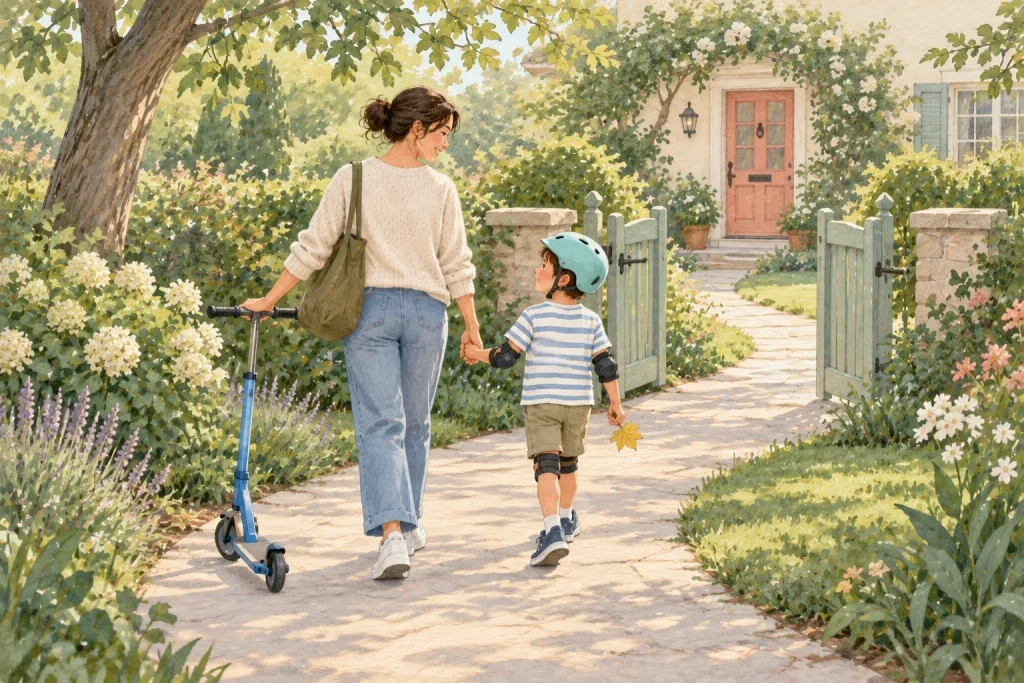
There is still dinner to make. The scooter goes back in its place, the water bottle needs washing, and perhaps a yellow leaf ends up on the kitchen table.
Tomorrow your child might ask for the same loop. By then, you will already know where the good stopping place is.